System Notes: The Green Bubble Machine
“Once markets start trading derivatives on green volatility, the system won’t need projects to succeed. It’ll just need them to fluctuate.”
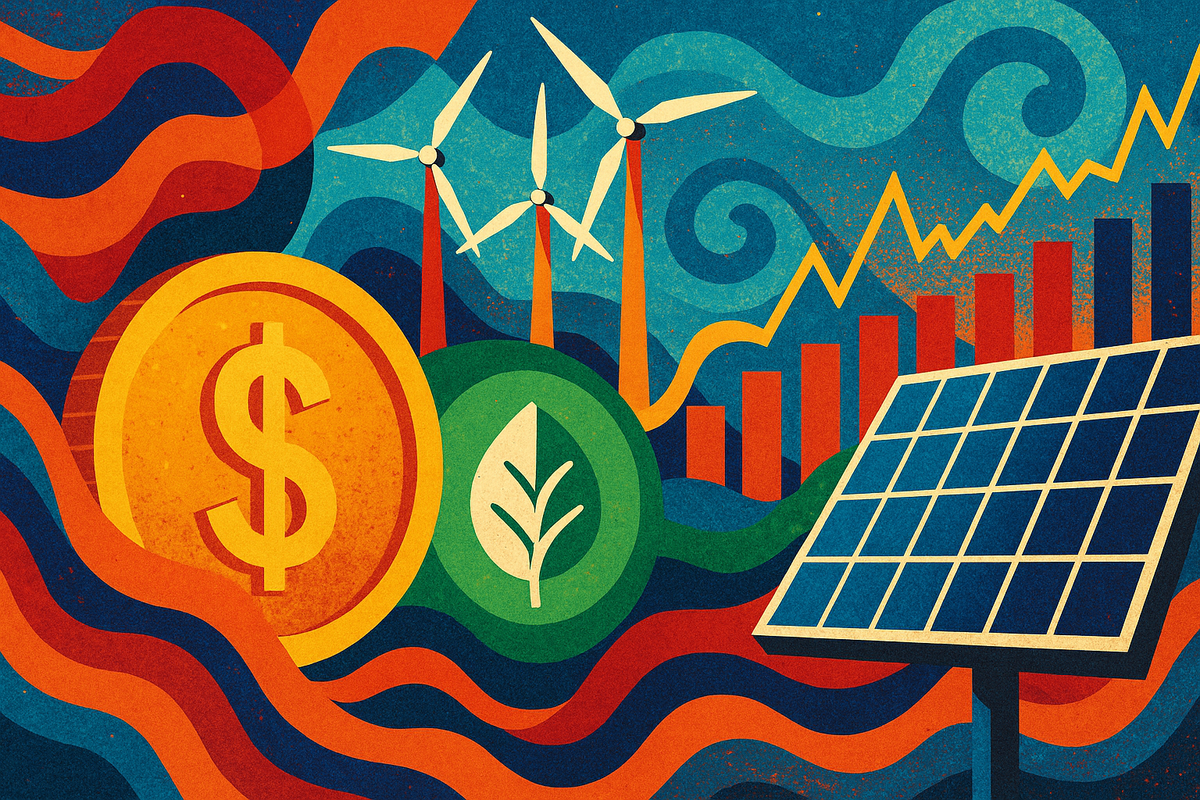
Hook
The shift to clean energy is essential. But the way we’re financing it might make the system collapse before the planet cools.
Everyone talks about solar panels, EVs, and wind farms as salvation tech — the next industrial revolution. But underneath the sustainability slogans, the wiring looks familiar: banks, hedge funds, debt, speculation, and hype.
The clean-energy revolution is running on dirty code — the financial kind.
Context
A group of Chinese researchers did something rare: they treated the financial system like a living organism. Using ten years of high-frequency data from banks, insurers, and new-energy firms, they mapped how financial stress actually travels.
Their finding: banks are the super-spreaders of instability. When markets wobble, they transmit the shock straight into renewables. When renewables falter, the stress bounces back into banking.
This is systemic risk — not “one company goes under,” but entire layers of the economy twitching in sync.
And while the study focused on China, the pattern is global.
- In 2023–24, U.S. clean-tech projects froze as interest rates rose, killing off hundreds of startup-scale solar firms.
- In Europe, renewable bonds cracked under volatile energy prices.
Different continents, same feedback loop.
The Wiring
Here’s what that looks like in motion:
A rooftop-solar loan in Fresno gets bundled into a green bond, sold to an ETF in New York, financed by a bank in Hong Kong that’s hedging lithium futures sourced from Chile.
That’s one household’s energy upgrade stitched into four financial systems.
Governments didn’t build this the way they built highways or power grids. They outsourced it to markets. Subsidies and tax credits became bait. Wall Street, Beijing, and Brussels did the rest.
Now the energy transition isn’t just a policy — it’s a position on a global balance sheet.
The Pattern
If it feels familiar, that’s because it is. Every major boom runs the same cycle:
- Hype – The future is sold as inevitable progress.
- Leverage – Capital floods in faster than reality can absorb it.
- Consolidation – Winners use scale to corner the market.
- Crisis – The bubble pops; public money cleans up.
- Repeat.
Railroads. Dot-coms. Crypto. Now climate tech.
Not every cycle ends in collapse — the post-WWII highway buildout worked because it was publicly financed and stable. But green finance isn’t built like that. It’s a casino running on good intentions.
The Paradox
Markets are great at short-term innovation but terrible at long-term coordination. Climate systems demand the opposite.
Carbon markets try to price the future, but they trade on quarterly mood swings — like measuring sea-level rise with a stopwatch.
That’s the paradox at the heart of the green boom: the planet’s timeline doesn’t match the market’s.
How It Hits Home
If you’re under forty, every boom you’ve lived through — tech, crypto, now climate — came wrapped in debt and disappeared in a downturn.
Green jobs sound permanent, but they’re still hostage to interest rates.
When the Fed hikes, your town’s solar buildout pauses. When investors flinch, the EV factory cuts shifts.
You don’t feel systemic risk until your paycheck does.
The Feedback Loop
The contagion runs both ways. Finance feeds renewables. Renewables feed finance. When one buckles, both flinch.
And it’s about to get worse.
Once markets start trading derivatives on green volatility — betting not on success but on the swings themselves — the system won’t need projects to succeed. It’ll just need them to fluctuate.
That’s not sustainability. That’s speculation with a recycling logo.
The Fix
We can’t decouple markets from the energy transition, but we can make them less brittle.
- Treat clean energy like infrastructure.
Not like an app. Long timelines, boring returns, steady funding. - Rewire incentives toward durability.
Reward projects that stay functional for decades, not quarters. - Integrate finance and climate policy.
When one collapses, the other goes with it — plan accordingly. - Expose the green mirage.
Distinguish real infrastructure from speculative ESG fluff.
This isn’t utopia. It’s triage. We already subsidize risk through bailouts — it’s time to subsidize resilience instead.
The Real Threat
The danger isn’t climate denial. It’s climate speculation — turning survival into another asset class.
ESG funds turned sustainability into ticker symbols. Once it’s tradable, it’s gameable. The same playbook that inflated tech and crypto is being run on the planet itself.
If this bubble pops, it won’t just erase wealth. It’ll erase public trust — and that’s harder to rebuild than infrastructure.
The Wrap
The study out of China is a mirror held up to the global economy. It shows how even a centralized state-capitalist system can’t escape market logic. The rhythm of leverage still dictates the rhythm of progress.
Clean energy isn’t immune; it’s just the latest sector plugged into the feedback loop of hype and fragility.
If we keep wiring tomorrow’s grid through yesterday’s casino, don’t be shocked when the lights flicker.
The planet might survive.
The market never does.