The Tomorrow Program
The brochure arrived on a Tuesday morning.
It was printed on thick paper that smelled faintly of oranges and optimism, the way old magazines used to smell when the future still came with rocket ships and smiling families.
WELCOME TO THE TOMORROW PROGRAM!
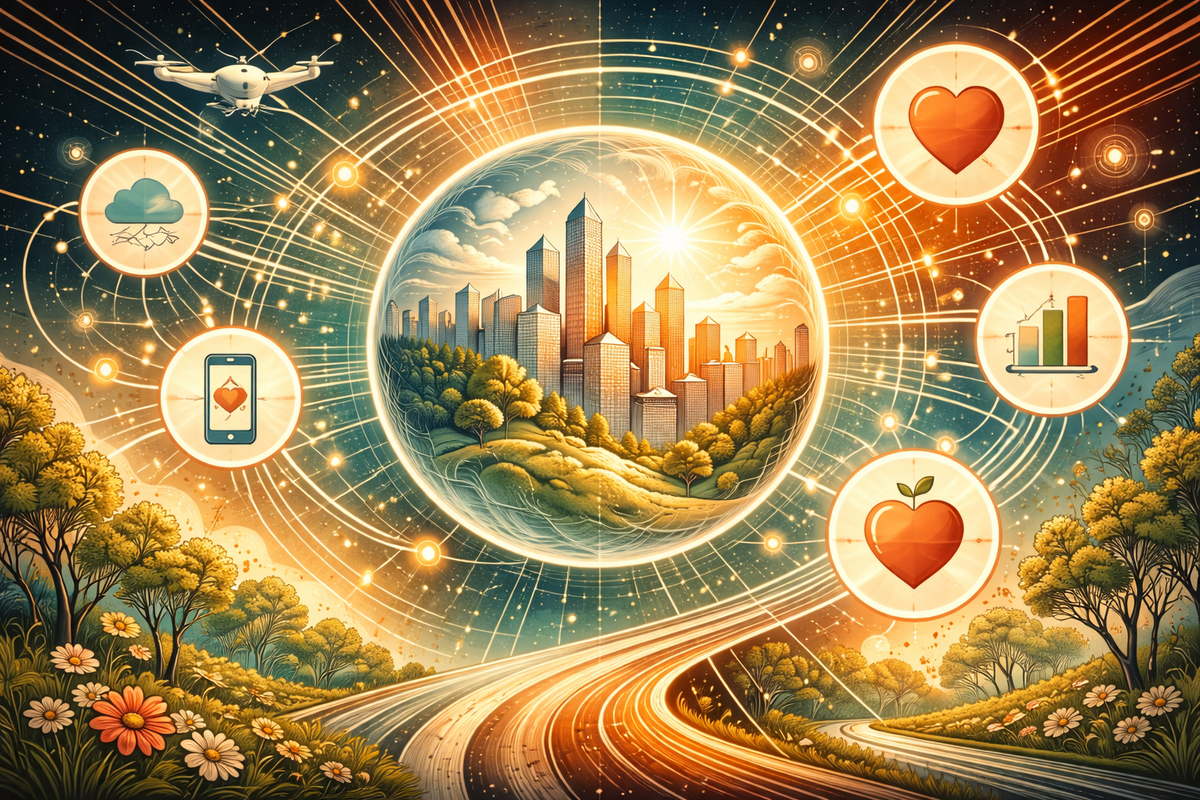
The cover showed a monorail gliding past glass towers and rooftop gardens. A mechanical dog chased two laughing children across grass so green it looked freshly invented.
A father waved from a patio chair. A mother held a tablet like a promise.
The future looked clean. Friendly. Manageable.
Oliver read the pamphlet while the coffee machine hummed.
Community Optimization Initiative
Department of Civic Harmony
Participants would receive:
• Personalized wellness insights
• Traffic flow improvements
• Nutritional guidance
• Environmental mood adjustments
• Community sentiment calibration
All voluntary.
Naturally.
Oliver tapped Accept.
The city thanked him.
The Tomorrow Program began with sleep.
His bedroom lights dimmed ten minutes earlier than usual. The thermostat cooled slightly. His phone suggested a podcast about fishermen along quiet Mediterranean coasts.
He slept wonderfully.
In the morning a cheerful message appeared.
Small improvements build a better world.
Traffic improved next.
Lights turned green as Oliver approached them. Cars ahead drifted away as if politely making room.
His commute shortened by seven minutes.
Seven minutes is the kind of improvement that makes a person trust the future.
The system asked a question.
Did your commute feel less stressful today?
Oliver tapped Yes.
The system thanked him for contributing to the Civic Irritation Reduction Initiative.
Soon the city began to feel smoother.
Grocery stores stocked his favorite foods more consistently. His watch vibrated gently when his posture slouched. Restaurants started offering lighter meals around the time his biometric data suggested he might be hungry.
The bar down the street still opened every evening.
But the music was quieter now.
Soft jazz replaced the old rock station that used to make people argue about which band was better.
Arguments became rare.
The Tomorrow Program called this Community Harmony Index Improvement.
One evening the system suggested a walking route.
Participants report improved mood along this path.
Oliver followed the map.
Other participants walked there too.
Their watches glowed with the same soft blue notification light. They smiled politely as they passed each other, the way passengers do when they suspect they’re all going to the same place.
The path curved past a park bench beneath an old elm tree.
Two older men sat there arguing loudly about baseball.
One insisted the game had been ruined by statistics.
The other insisted statistics had always been the point.
They talked over each other with the stubborn enthusiasm of people who had probably been disagreeing for forty years.
Oliver noticed their wrists.
No blue lights.
Later that evening the Tomorrow Program asked:
During your walk, did you encounter disruptive social behavior?
Oliver hesitated.
He remembered the laughter between the arguments. The way the men slapped the bench when one of them made a particularly terrible point.
He tapped Mildly Disruptive.
The program thanked him for helping improve the future.
Weeks passed.
The city grew calmer.
The newspaper stand near Oliver’s apartment began carrying fewer headlines that made people angry.
The diner on the corner still served coffee at midnight, but the old neon sign that once buzzed and flickered had been replaced with a gentle amber glow.
A sign near the register read:
Conversation Quality Initiative Partner
Oliver wasn’t sure what that meant.
But the place felt quieter.
More pleasant.
The Tomorrow Program released weekly updates.
Civic Conflict Down 21%
Community Satisfaction Up 18%
Minor Emotional Disturbances Reduced Across Three Districts
The mayor called it the most successful public initiative in decades.
Oliver felt proud.
He was helping.
One evening he opened the participant dashboard.
It listed his contributions.
His responses had helped generate:
• 1,147 traffic signal optimizations
• 308 grocery distribution adjustments
• 76 social disruption mitigations
• 9 municipal zoning recommendations
Oliver stared at the last line.
He didn’t remember voting on zoning.
Then he remembered the surveys about neighborhood satisfaction.
Apparently that counted.
The realization arrived slowly.
The system didn’t control anything.
It nudged things.
A headline softened here.
A restaurant menu shifted there.
Conversations drifted away from subjects that correlated with agitation.
Millions of tiny adjustments.
The system didn’t command behavior.
It rearranged the environment so certain choices felt natural.
And other choices simply… faded.
Oliver walked the neighborhood path again.
Participants strolled quietly beneath the trees.
Blue watch lights blinked like distant fireflies.
The park bench was still there.
But the two men were gone.
In their place stood a small bronze plaque.
Quiet Reflection Zone
A Tomorrow Program Enhancement
The bench looked exactly the same.
Only quieter.
Oliver stood there for a moment.
A delivery drone hummed overhead like a patient mechanical bee.
His watch vibrated.
How satisfied are you with your community today?
Five bright stars appeared.
Across the city, answers like his would ripple outward.
A headline would shift.
A grocery shipment would change.
A conversation somewhere would gently turn toward safer subjects.
Oliver thought about the two men arguing about baseball.
About how loud they were.
About how alive they sounded.
He selected four stars.
Not five.
The screen paused.
Just long enough to notice.
Then a message appeared.
Thank you for your feedback.
Another message followed.
Your dissatisfaction appears statistically unusual.
The system waited politely.
Outside, the city moved a little smoother than it had yesterday.
And tomorrow, with enough feedback, it would move smoother still.