The Market Has Detected an Unauthorized Competitor
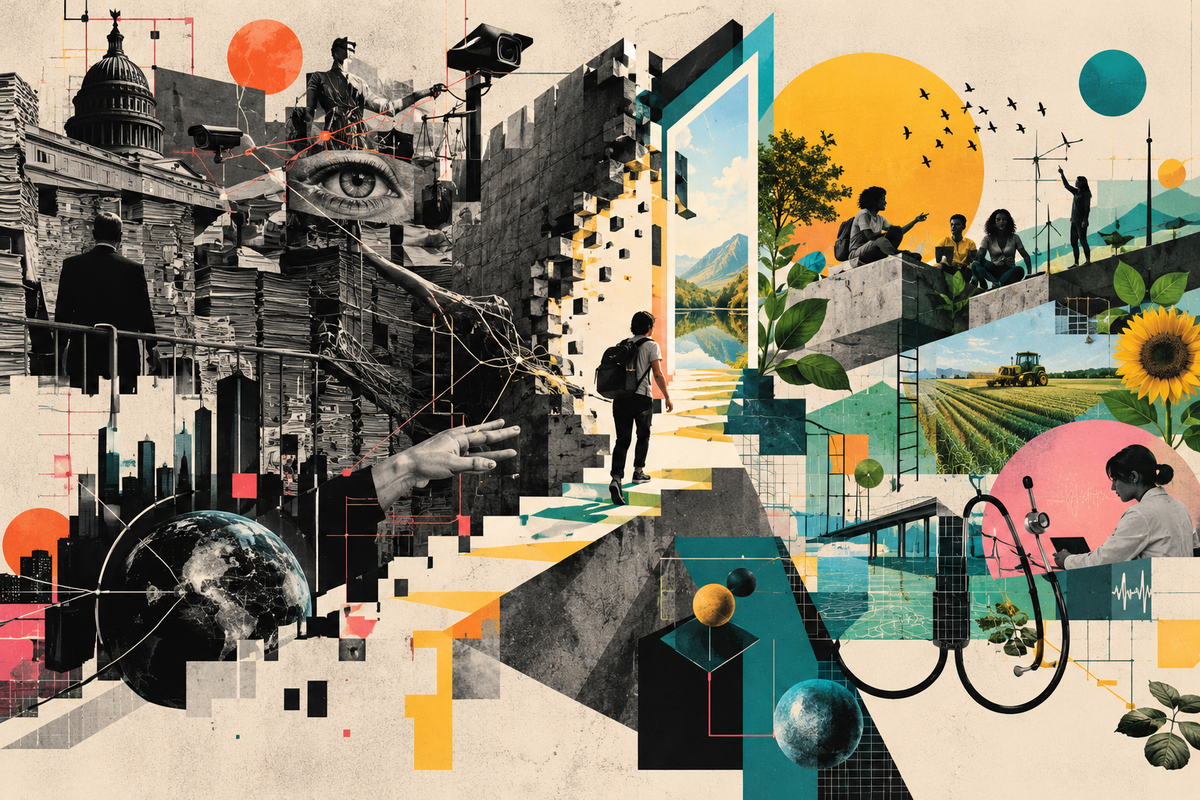
We taught machines to write software, decode bureaucracy, and make expertise more accessible. Perhaps it’s time to use some of that intelligence to make companies compete for our business again.
Somewhere in America, an IT director is preparing a business case for keeping software nobody particularly likes.
It works. Mostly.
It’s expensive, complicated, and connected to fourteen other systems through integrations that nobody fully understands anymore. One of the original developers retired. Another left to raise alpacas. The documentation describes a version that hasn’t existed since 2014.
There are alternatives. Some are cheaper. Some are better.
Unfortunately, replacing the current system would require eighteen months, several consultants, a steering committee, and a migration budget substantial enough to attract congressional attention.
So the company renews.
Another successful year for the free market.
Competition is, after all, the foundation of our economic system. Customers are free to choose whichever product best serves their needs.
And once they’ve chosen, they’re free to spend the next fifteen years discovering what leaving costs.
The Remarkable Business of Being Difficult to Replace
Oracle is an interesting case study.
The company builds sophisticated software that supports critical business operations. Its products provide genuine value. Large organizations have legitimate reasons to pay for reliability, engineering, and support.
Oracle also operates in an industry where software licensing can become remarkably complicated.
Its commercial Java SE Universal Subscription, for example, uses an employee-based pricing model. Oracle introduced lower prices for smaller organizations in October 2026. Free Java alternatives exist, and not every Java user needs a paid Oracle subscription.
Still, pricing a software support subscription according to the size of a company’s workforce is an impressive reminder of how creative enterprise licensing can become.
The European Commission was reportedly gathering information about Oracle’s cloud-software licensing practices in September 2026. No formal investigation had been opened, and scrutiny is not evidence of wrongdoing.
The broader problem extends well beyond Oracle.
Enterprise software can become so deeply embedded in an organization that the cost of replacing it overwhelms the potential benefit of choosing something better.
Some of that difficulty is unavoidable. Critical systems are complicated, and changing them carries real risk.
Some of it comes from proprietary dependencies, restrictive contracts, incompatible data formats, and accumulated technical debt.
These distinctions matter.
But so does the consequence.
Eventually, a company may no longer need to be the best available choice.
It only needs to remain less expensive than the consequences of leaving.
That’s quite a competitive advantage.
Although, to admire a moat, you occasionally have to forget what moats are for.
We Have a Machine for That
Artificial intelligence has arrived with some extraordinary capabilities.
It can help people write software, analyze documents, understand unfamiliar systems, explain technical subjects, and perform tasks that previously required specialized experience.
Naturally, we’ve devoted considerable attention to helping corporations produce more content, automate customer interactions, and send emails that sound almost convincingly human.
All worthwhile endeavors, I’m sure.
But consider another possibility.
What if we used AI to make existing businesses easier to compete with?
Not just cheaper to operate.
Easier to challenge.
An organization trying to leave an expensive database platform could use AI to analyze its applications, map dependencies, explain undocumented code, and help migrate toward an alternative such as PostgreSQL.
This is not science fiction. Database migration tools and established technical methods already exist. AI could potentially make parts of that difficult work more accessible and less expensive.
It wouldn’t eliminate the need for testing, expertise, or accountability.
But it might change the economics of leaving.
And that creates an interesting situation for the incumbent.
Suddenly, customer satisfaction becomes relevant again.
Imagine the horror.
The Least Common Interface
There’s another possibility hiding inside this technology, and I find it considerably more interesting than getting an AI assistant to organize my inbox.
For decades, we’ve required people to adapt to computers.
Learn the commands. Understand the terminology. Follow the workflow. Find the right menu. Complete the form.
If you can’t understand the system, perhaps you should attend training.
Or hire a consultant.
Or purchase the enterprise edition, which includes a more intuitive interface for an additional annual fee.
But what if the interface adapted to the person?
What if the least common interface wasn’t a technical standard at all?
What if it was simply a human being trying to accomplish something?
A farmer shouldn’t need to become a software engineer to understand the data produced by equipment they purchased.
A patient shouldn’t need a working knowledge of insurance administration to understand why a medical bill costs what it does.
A citizen shouldn’t need a degree in public finance to compare municipal contracts.
And someone with an idea for a neighborhood business shouldn’t have to master accounting, procurement, software development, and regulatory terminology before they can meaningfully explore it.
Imagine an assistant that meets people where they are.
Not merely answering questions, but helping them understand the underlying systems, recognize uncertainty, develop skills, find collaborators, and eventually build something of their own.
A curious teenager could become a contributor to a community software project.
A retired mechanic could help document repair procedures for the next generation.
A neighborhood could investigate the feasibility of a purchasing cooperative without first assembling a consulting budget.
The idea isn’t that AI makes everyone an expert overnight.
It’s that the distance between I wonder if we could and here’s how we might begin becomes dramatically shorter.
That’s a different kind of productivity.
And unlike an automated email reminding employees to submit their timesheets, it might actually expand what people believe they’re capable of doing.
Some Perfectly Reasonable Trouble to Cause
Consider agriculture.
Modern farm equipment can be an engineering marvel. It can also leave its owner dependent on specialized diagnostic tools and repair resources.
In July 2026, the Federal Trade Commission announced a proposed settlement with Deere intended to expand access to repair tools for farmers and independent technicians. Court approval is required for the stipulated order to become legally enforceable.
Apparently, whether someone can repair a tractor they’ve purchased is complicated enough to involve federal antitrust litigation.
Meanwhile, communities are already developing open agricultural tools such as farmOS, a free and open-source farm management platform.
farmOS doesn’t replace proprietary tractor diagnostics. But it demonstrates a different model for developing tools farmers can use, modify, and help improve.
Now imagine applying AI to accelerate that kind of collaborative development.
Or consider healthcare.
Medical professionals spend enormous amounts of time interacting with administrative systems that were ostensibly created to help them provide care.
Wouldn’t it be interesting if independent clinics could choose affordable, interoperable software without sacrificing essential functionality?
OpenEMR is already an open-source electronic medical record and practice management platform. Its eighth major version received ONC Health IT certification in January 2026.
That doesn’t make it appropriate for every medical practice. Nor does open-source software eliminate implementation, maintenance, cybersecurity, or compliance costs.
It does demonstrate that a community-developed alternative can meet meaningful regulatory requirements.
Then there’s government.
We spent much of the Cold War learning to fear what happens when governments know too much about their citizens.
The Soviet KGB. East Germany’s Stasi. Networks of informants, intercepted conversations, surveillance teams, and entire buildings dedicated to filing away the details of ordinary lives.
Watching people was an expensive, labor-intensive business.
Today, artificial intelligence can search, correlate, and analyze enormous quantities of information in ways those institutions could scarcely have imagined.
The dangers are obvious. Or they should be.
But there’s something interesting about that same capability when we reverse the direction.
We live in a country where the government is supposed to answer to its people.
Why shouldn’t ordinary people have equally sophisticated tools for examining what their government does?
Not spying on the private lives of public employees. Not building dossiers on political opponents.
Examining public decisions, public spending, public contracts, and the institutions exercising authority on our behalf.
USAspending.gov already publishes federal spending information. The Open Contracting Data Standard provides a common way to publish and analyze public procurement records.
Imagine AI helping citizens follow a project from its initial proposal through the bidding process, contract amendments, payments, and final results.
Who received the contract? Who else competed? Why did the price change? How does it compare with similar projects? What did the public actually receive?
Questions that should be relatively easy to ask, without requiring someone to spend six months learning government accounting or becoming personally acquainted with a Freedom of Information Act request.
Of course, public records can be incomplete or inaccurate. An unusual contract is not proof of corruption. AI should expose the evidence and help people investigate, not manufacture accusations.
But consider the larger irony.
We’ve spent decades imagining the terrifying possibilities of governments using technology to watch their citizens.
Perhaps we should spend a little more time imagining citizens using technology to understand their governments.
The government shouldn’t know everything about you.
You should be able to understand a great deal more about what it does with your money.
A controversial idea, apparently.
Even grocery shopping offers a place to begin. Open Prices is building a crowdsourced database of food prices. Combine sufficiently reliable price data with AI-assisted comparisons, and shoppers could have better tools for evaluating competing stores, package sizes, and advertised discounts.
Perhaps we’d finally discover whether the family-size box contains more cereal or simply more family-oriented optimism.
These projects exist today. Most weren’t created by generative AI.
That’s precisely the point.
The communities, ideas, and foundations already exist.
What happens when developing and contributing to them becomes significantly easier?
What If We Open-Sourced the Competition?
Not every useful idea needs another venture-backed startup.
Some need a public repository, knowledgeable contributors, sustainable funding, and people willing to maintain the software after the exciting part is finished.
Imagine communities identifying products and services that are unnecessarily expensive, difficult to use, or difficult to leave.
They could independently develop alternatives, using AI to assist with research, documentation, coding, testing, and learning.
The resulting software could be released under open-source licenses that allow others to use, modify, and improve it.
There are legal boundaries. Copyright, patents, trade secrets, and safety requirements don’t disappear because an AI helped write the code.
But independent alternatives are entirely compatible with a competitive economy.
Local businesses could earn money implementing the software. Developers could be paid to improve it. Specialists could sell training, integration, and support.
Customers could choose who maintained their systems.
And if one provider became too expensive, they could hire someone else.
Imagine building a business so useful that customers willingly pay you despite having the technical and legal ability to leave.
You might have to keep being good at your job.
Of course, open-source projects need money too.
Free software doesn’t mean free labor, free infrastructure, or free security updates. Someone still has to fix things on Tuesday.
But there’s an important difference between paying someone because their work is valuable and paying them because escaping their product is prohibitively difficult.
One rewards continued service.
The other can reward continued dependence.
The free market is supposed to understand this distinction.
Unfortunately, the AI Companies Have Also Discovered Capitalism
There’s a problem with this lovely idea.
AI doesn’t automatically distribute economic power.
The largest companies have enormous advantages in computing infrastructure, proprietary data, distribution, financing, and access to customers.
The OECD’s 2026 analysis of AI markets identifies concentration and switching costs as potential threats to competition across important parts of the AI supply chain.
In other words, we could use artificial intelligence to help people escape proprietary ecosystems.
Or we could build an entirely new collection of proprietary ecosystems for them to escape later.
Both outcomes are plausible.
And there’s no reason to assume a company will voluntarily undermine a profitable dependency simply because a better alternative is technologically possible.
That’s not a moral judgment. It’s an incentive.
Which is why open standards, portable data, transparent development, independent infrastructure, and sustainable community governance matter.
AI is a tool.
Whether it helps concentrate power or distribute capability depends on who controls it, how it’s deployed, and whether users retain meaningful choices.
We should probably pay attention to those details before congratulating ourselves on democratizing intelligence through a monthly subscription.
The Competition We’ve Been Waiting For
None of this requires declaring corporations evil, profits immoral, or capitalism a failed experiment.
Businesses should be rewarded for creating valuable products.
Innovators should benefit from their work.
Specialized expertise should command fair compensation.
And large companies often achieve efficiencies that smaller competitors cannot.
But those advantages are not the same thing as making alternatives unnecessarily difficult.
A healthy market shouldn’t require every customer to remain loyal forever.
A successful business shouldn’t need the exit door welded shut.
AI gives us an opportunity to rethink more than how quickly companies produce things.
It could change who gets to participate in producing them.
Who can understand complicated systems.
Who can learn a specialized skill.
Who can organize a group around a shared problem.
Who can build an alternative.
And, perhaps most importantly, who can afford to walk away.
We don’t need another grand promise that technology will eventually make everything wonderful.
We need people using the tools already available to solve problems that have been unnecessarily profitable for too long.
Find an expensive dependency in your industry. Find the people working on an open alternative. Contribute expertise, funding, testing, documentation, or simply your experience as someone stuck using the existing product.
If there isn’t an alternative, perhaps there’s an opportunity to start one.
And if you know a project making genuine competition possible, share it. Other people may be looking for the same exit.
For decades, we’ve celebrated entrepreneurs who disrupt established markets.
Now we have tools that might allow considerably more people to become those entrepreneurs, collaborators, and builders.
Surely the free-market enthusiasts will be delighted.
After all, if competition is so good for everyone, why should the companies selling us everything be the only ones equipped to compete?